
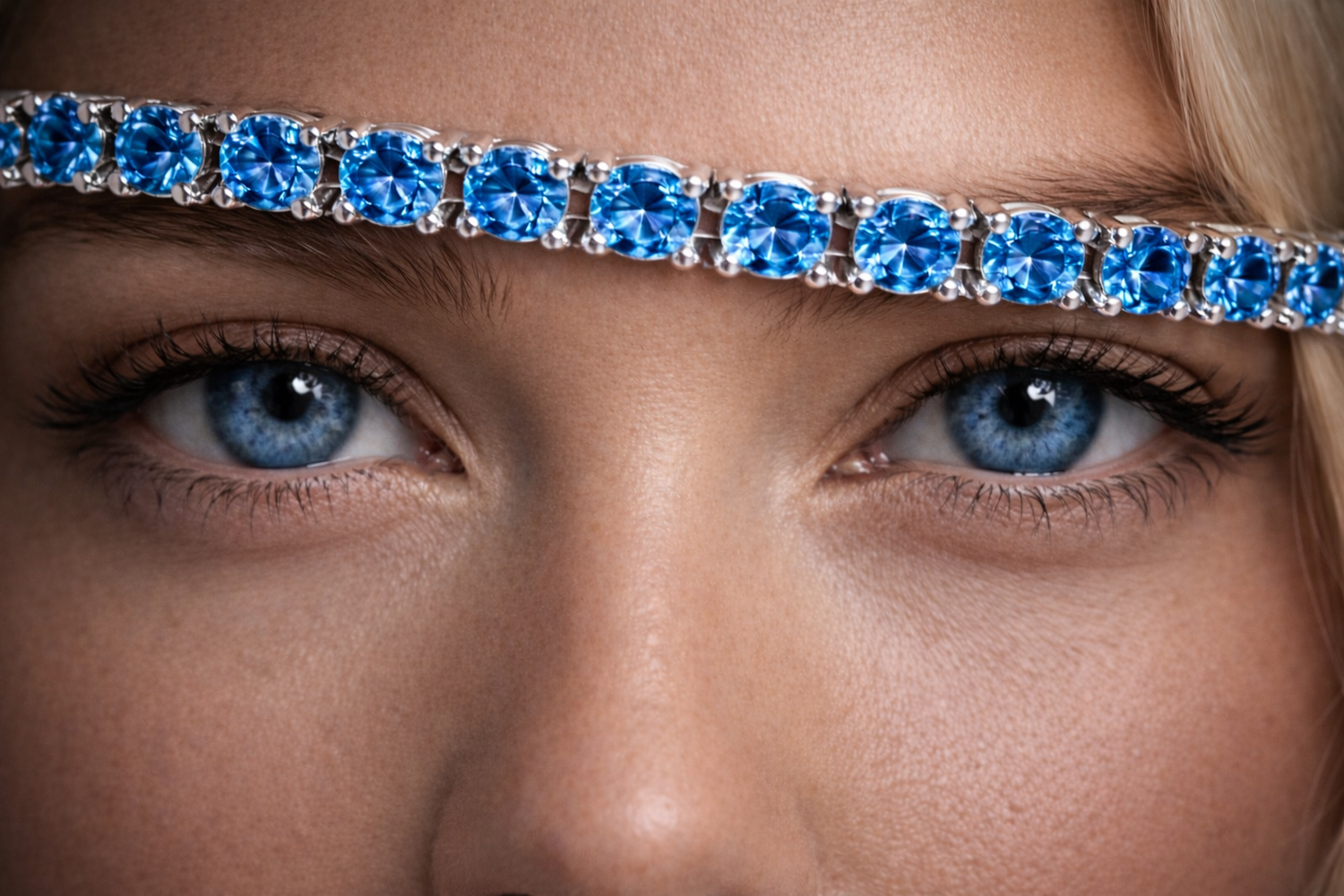
Blue Moissanite — How It Is Created and What Defines Its Depth
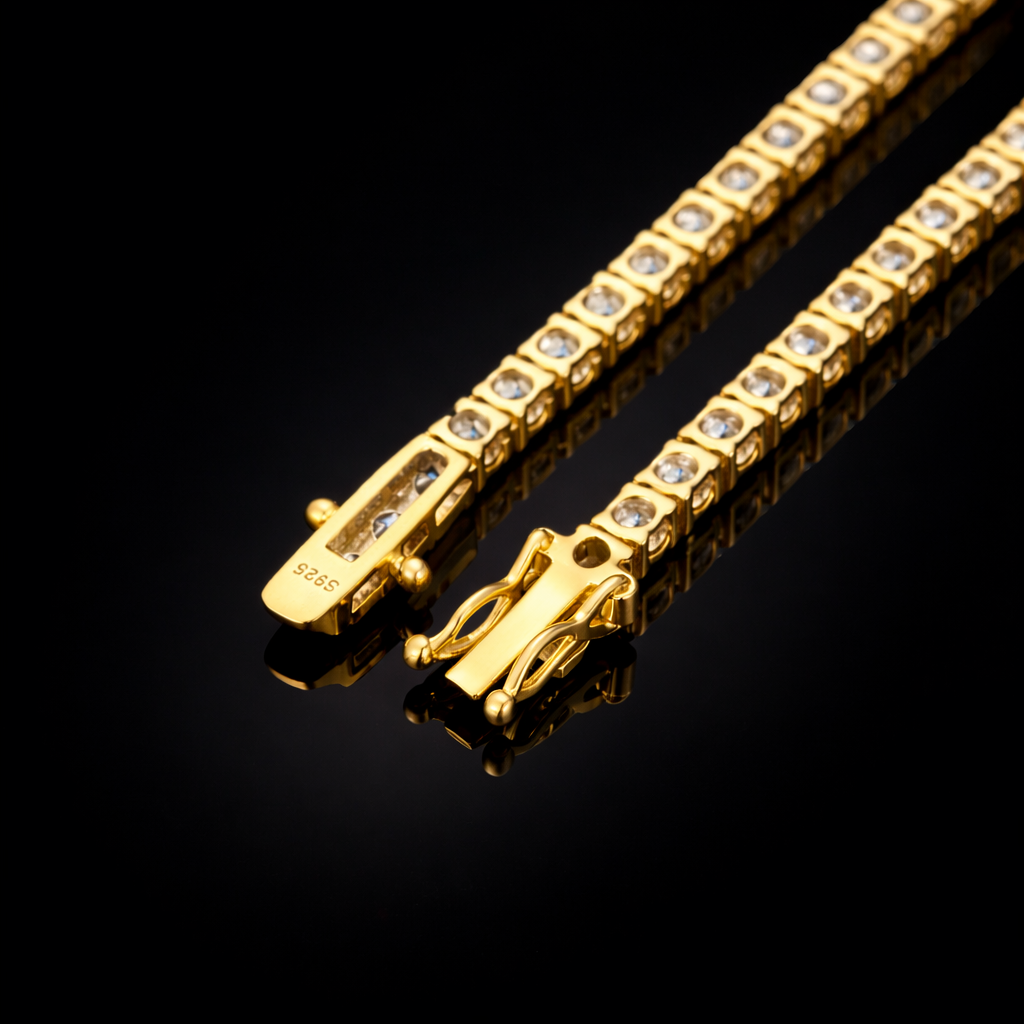
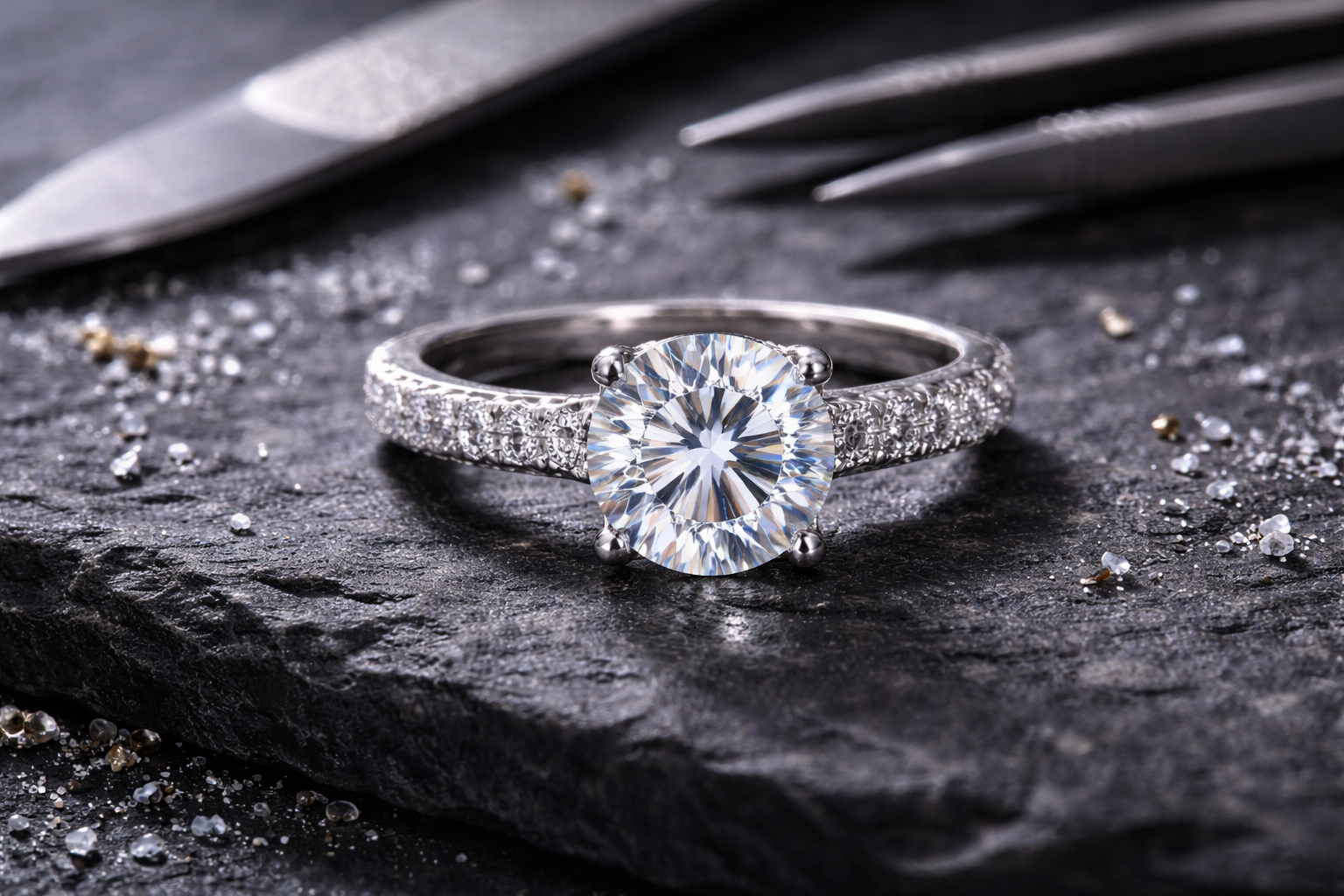
Blue moissanite represents a refined and technically advanced expression of colored moissanite. Known for its icy clarity or deep sapphire-like tones, blue moissanite combines visual intensity with exceptional durability — making it one of the most sought-after colored alternatives in modern fine jewelry.
Unlike traditional blue gemstones, blue moissanite offers consistency, performance, and long-term stability through a highly controlled creation process.
How Blue Moissanite Is Created
Moissanite is precision-created in laboratory environments using pure silicon and carbon, combined under extreme heat to form silicon carbide crystals. This process allows for exact control over clarity, structure, and optical performance.
To achieve blue moissanite, the crystal growth environment must be carefully adjusted during formation. The blue hue is not applied as a surface coating or treatment, but integrated into the crystal structure itself at the atomic level. Even minimal deviations in temperature, pressure, or growth duration can significantly alter the final color tone.
Because of this sensitivity, blue moissanite requires tighter tolerances and longer development times compared to colorless stones.
Icy Blue vs Deep Blue
Blue moissanite exists on a spectrum of tones, ranging from light, icy blue to deeper, sapphire-inspired shades. Lighter blues emphasize clarity and brilliance, producing a crisp, reflective appearance. Deeper blues offer increased color saturation and visual depth, requiring even greater precision during cutting to maintain light performance.
Balancing color intensity with brilliance is critical — overly deep tones can absorb light, while lighter tones demand near-perfect clarity to avoid a washed-out appearance.
Permanent Color Stability
High-quality blue moissanite is fully color-integrated, meaning its color remains stable throughout the entire crystal. It does not fade, cloud, or change over time due to:
-
Daily wear
-
UV exposure
-
Heat
-
Water or chemicals
This permanence distinguishes blue moissanite from coated stones, treated materials, and lower-grade alternatives.
Cutting and Quality Selection
Cutting blue moissanite requires expert precision. The cut must be optimized to preserve both brilliance and color balance. Poor cutting can cause light leakage, dullness, or uneven tone distribution.
Only stones that achieve the correct balance between color consistency, clarity, and light performance qualify for high clarity grades such as VVS1 and are selected for fine jewelry.
Why Blue Moissanite Commands Higher Value
Blue moissanite typically carries a higher value than colorless moissanite due to:
-
More complex crystal growth requirements
-
Lower yield per production cycle
-
Stricter selection standards
-
Greater cutting precision
Each successful stone represents increased time, expertise, and controlled engineering.
A Modern Alternative to Sapphire
While blue moissanite shares visual characteristics with sapphire, it surpasses it in brilliance and durability. Sapphire, though hard, lacks the fire and light dispersion of moissanite and can appear darker in low light.
Blue moissanite offers a balance of depth, clarity, and performance — making it suitable for daily wear without compromising visual impact.
Precision as Luxury
Blue moissanite is not defined by tradition, but by execution. Its appeal lies in controlled creation, permanent color, and consistent quality. For those who value performance and intention over rarity alone, it represents a modern and intelligent approach to luxury.
At JUVÉ, blue moissanite is chosen for its ability to deliver clarity, depth, and longevity — without compromise.


Leave a comment
This site is protected by hCaptcha and the hCaptcha Privacy Policy and Terms of Service apply.