
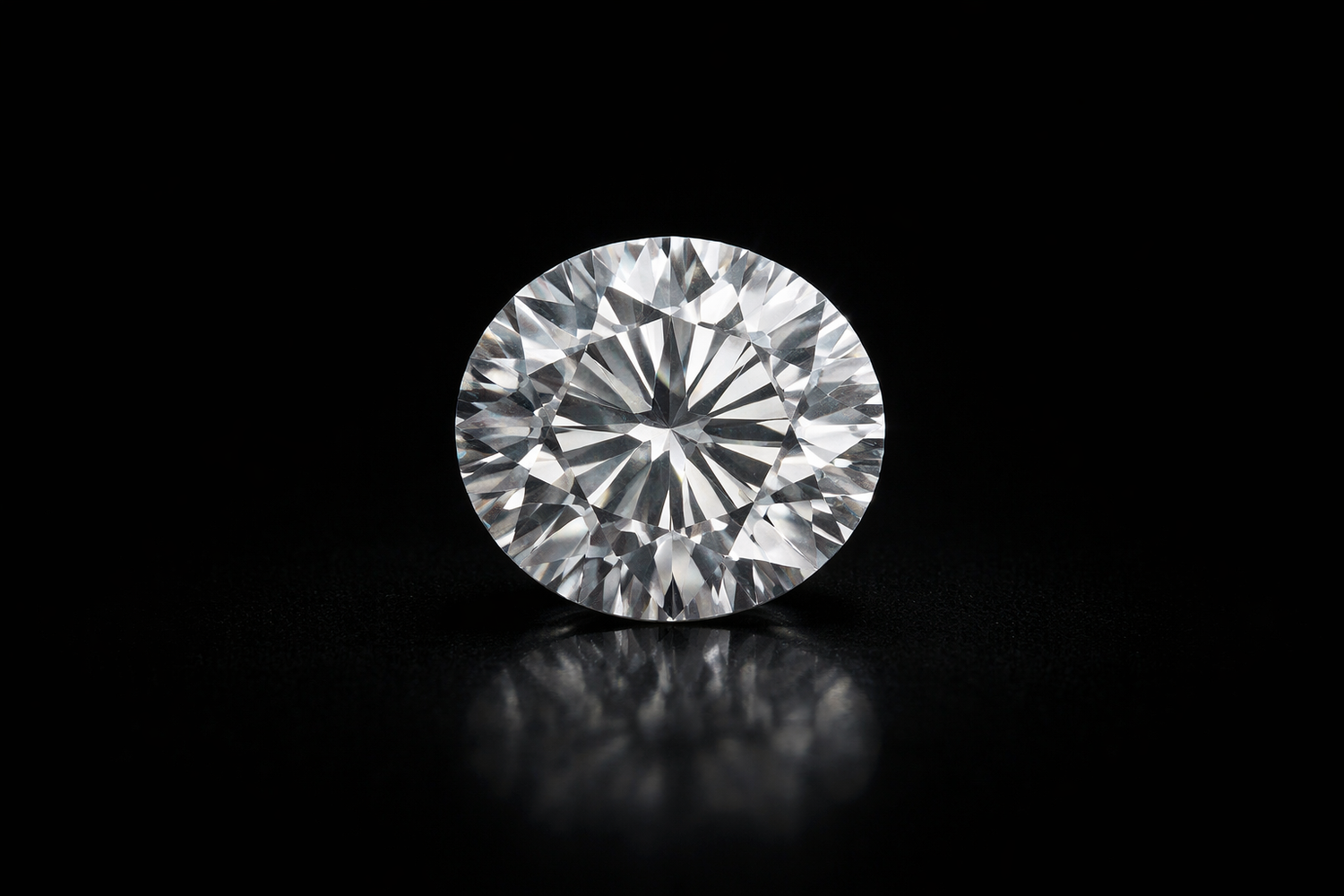
Why Diamonds Sparkle Less Than You Think
Diamonds are widely associated with sparkle. For decades, marketing has positioned them as the ultimate symbol of brilliance and light. But when sparkle is examined from a technical perspective rather than tradition, the reality is more nuanced.
To understand why diamonds sometimes appear less vibrant than expected, we need to look at how light actually behaves inside a gemstone.
What Sparkle Really Means
Sparkle is not a single property. It is the result of three measurable optical effects:
-
Brilliance – the reflection of white light
-
Fire – the dispersion of colored light
-
Scintillation – flashes of light created by movement
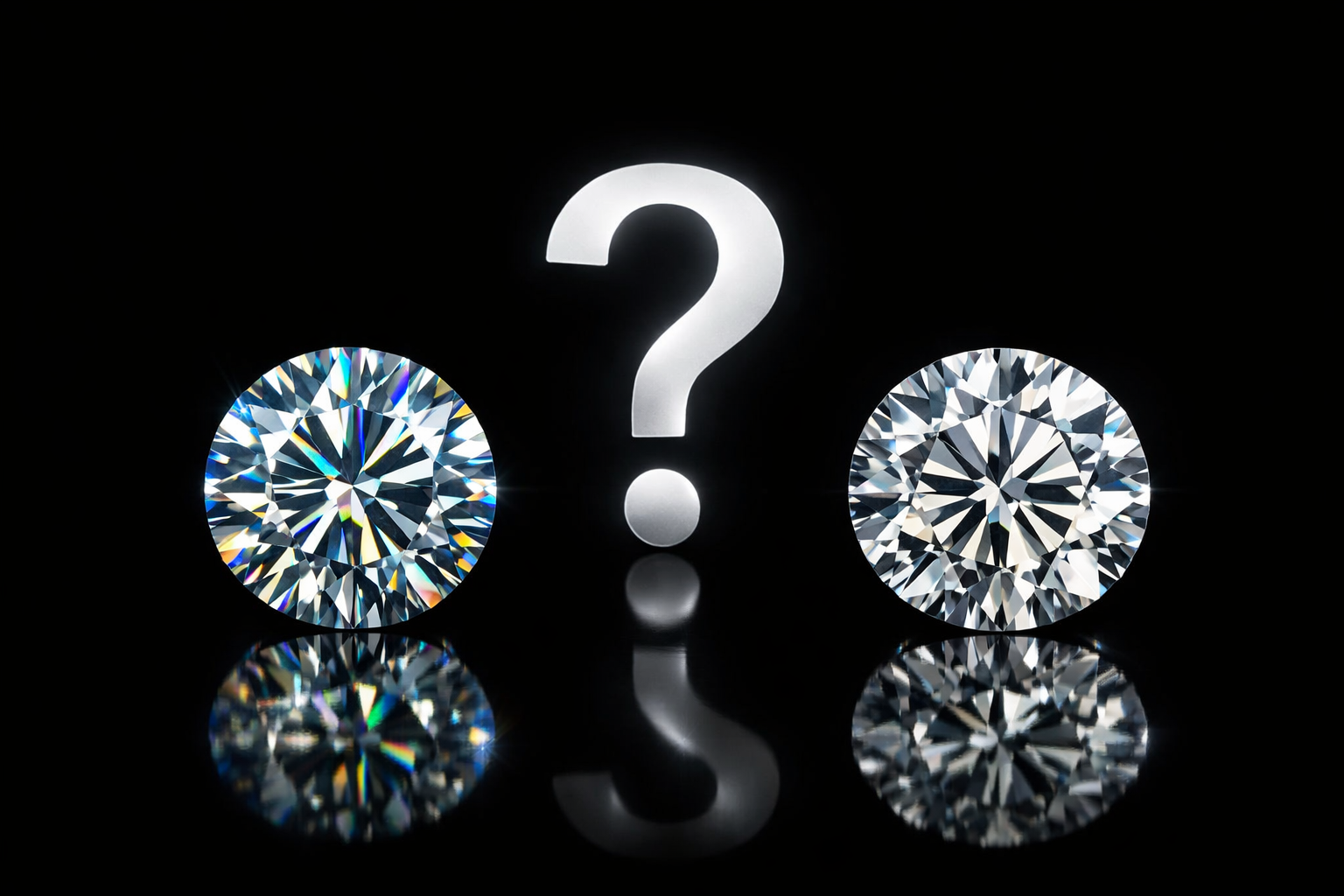
Diamonds perform well in brilliance, but they are intentionally cut to control and limit fire. This restraint is part of the classic diamond aesthetic — elegant, sharp, and refined — but it also means diamonds do not maximize light dispersion.
The Refractive Index Factor
A gemstone’s sparkle is heavily influenced by its refractive index, which measures how strongly it bends light.
-
Diamond refractive index: ~2.42
-
Moissanite refractive index: ~2.65–2.69
This difference may appear small, but visually it is significant. A higher refractive index allows more light to be reflected back to the eye, increasing both brilliance and fire.
Diamonds are optimized for balance and tradition, not maximum light return.
Why Diamonds Are Cut the Way They Are
Modern diamond cuts were developed to maintain a controlled, white-light appearance under varied lighting conditions. Excessive fire was historically considered undesirable, as it could appear chaotic rather than refined.
As a result, diamonds are cut to emphasize consistency rather than intensity. This design choice explains why diamonds often appear elegant but subdued — especially in low or indirect light.
Consistency vs Performance
Another factor affecting sparkle is clarity consistency. Natural diamonds frequently contain inclusions formed during their geological creation. Even stones graded at high clarity levels may interrupt light paths internally.
Precision-created gemstones, by contrast, allow for more consistent internal structures, enabling light to travel with fewer interruptions.
A Shift in Modern Expectations
Today’s buyers increasingly evaluate gemstones based on measurable performance rather than legacy perception. Brightness, fire, and visual presence now matter as much as tradition.
When viewed objectively, diamonds are refined — but restrained. Their sparkle is intentional, controlled, and limited by design.
Rethinking Sparkle
Diamonds are iconic, but sparkle is not solely defined by reputation. It is defined by physics. Understanding this distinction allows modern jewelry buyers to make more informed decisions based on performance rather than assumption.
Luxury is evolving — from rarity alone to precision, execution, and results.


Leave a comment
This site is protected by hCaptcha and the hCaptcha Privacy Policy and Terms of Service apply.