
How Is Moissanite Made?
Moissanite is often described as a modern alternative to diamonds — but few people truly understand how it is made, or why its production process is one of the reasons behind its exceptional performance.
Unlike diamonds, moissanite is not mined from the earth. It is precision-created using advanced scientific methods that allow for total control over clarity, structure, and optical performance. This controlled process is what sets high-grade moissanite apart from both natural gemstones and low-quality simulants.
The Origin of Moissanite
Moissanite was first discovered in 1893 by scientist Henri Moissan, who found microscopic silicon carbide crystals inside a meteorite crater. Natural moissanite is extremely rare — so rare that it is not used in jewelry.
Modern moissanite is created in laboratory environments, replicating the exact crystal structure of natural silicon carbide, but without the impurities and inconsistencies found in nature.
The Creation Process
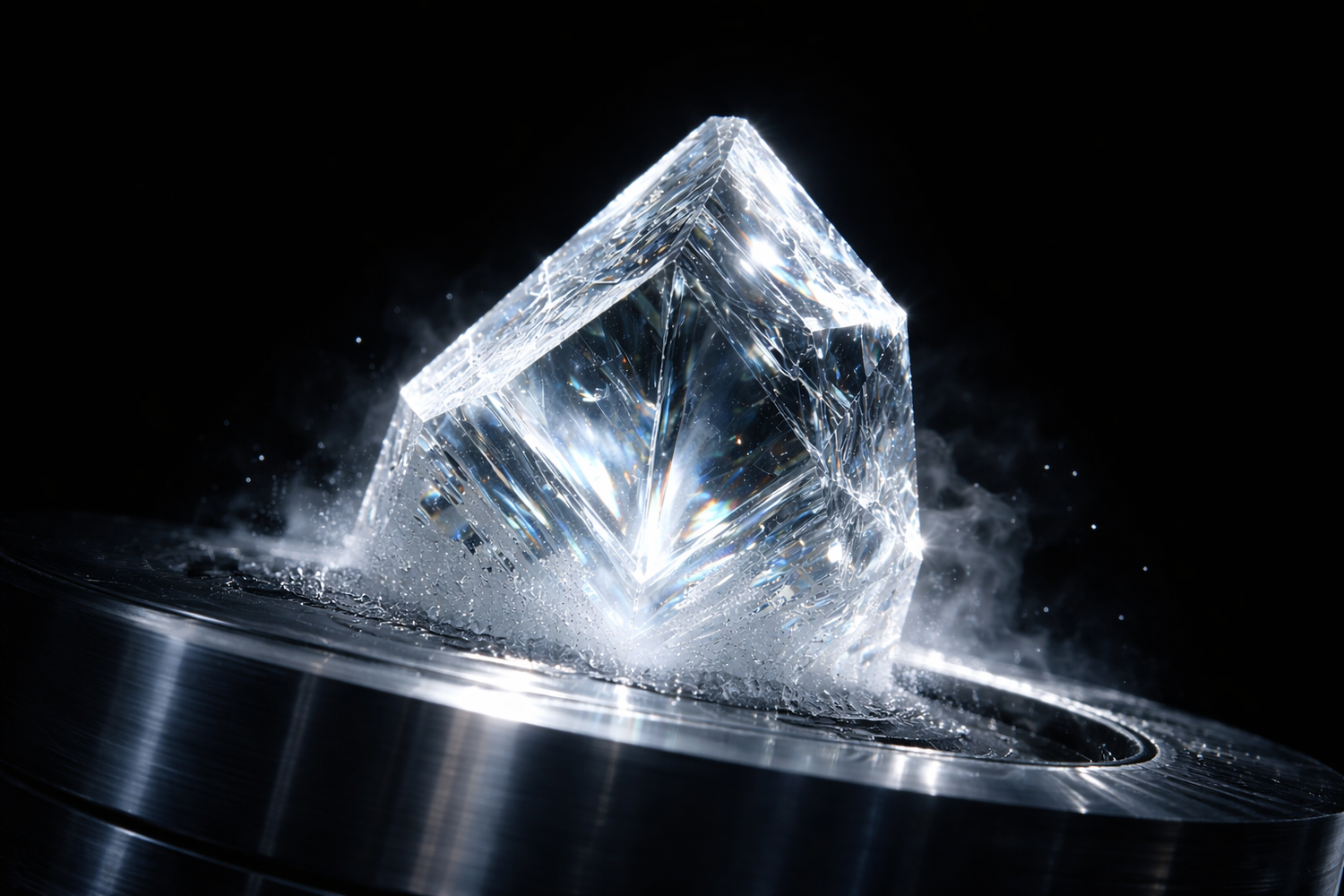
The production of moissanite begins with pure silicon and carbon, which are combined under extremely high temperatures and controlled conditions. Through a carefully monitored crystallization process, silicon carbide crystals begin to form.
This process can take several weeks, allowing the crystal lattice to grow slowly and evenly. The slow growth is critical — it ensures structural integrity, optical clarity, and durability.
Unlike mass-produced stones, high-quality moissanite is grown with precision rather than speed.
Cutting and Grading
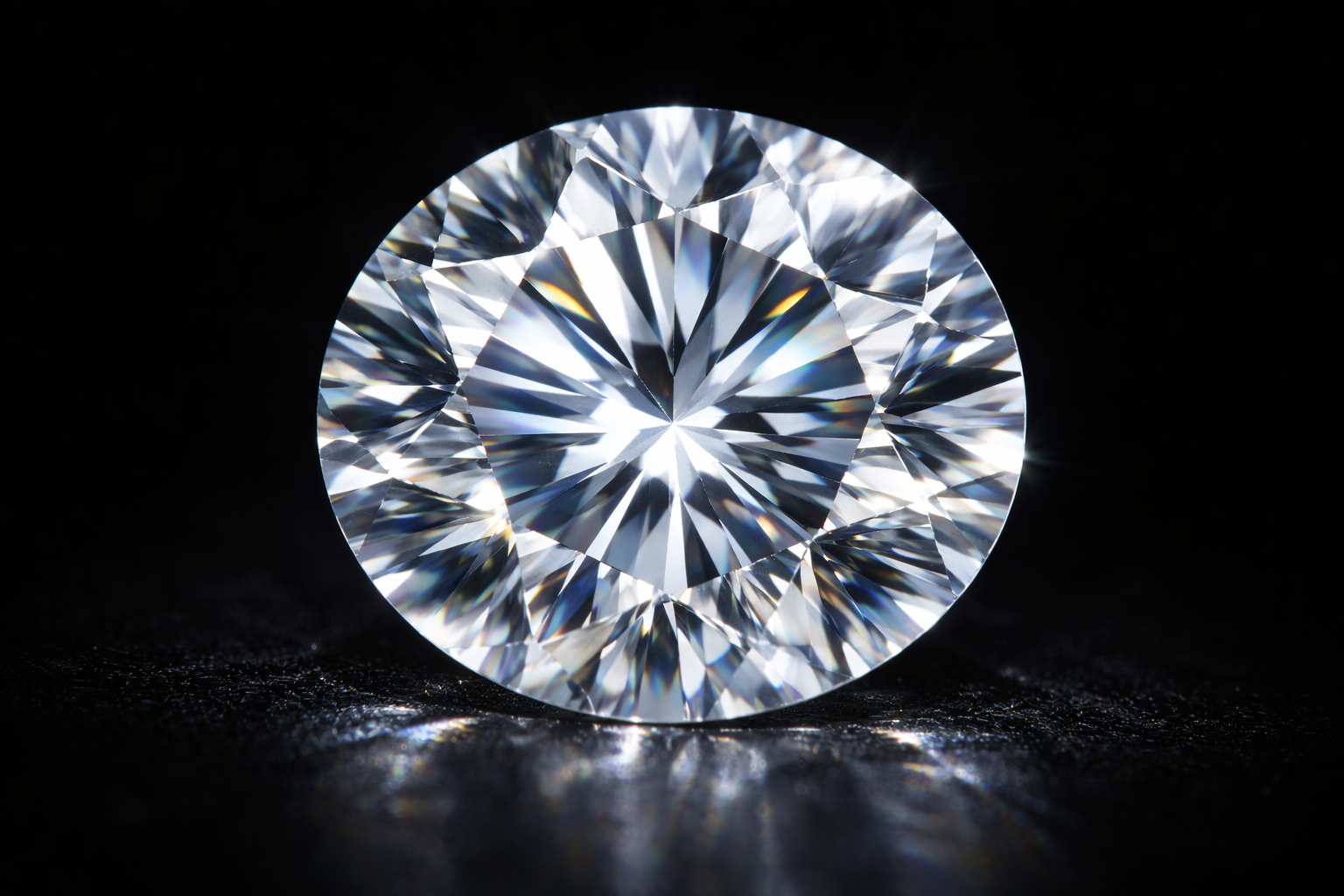
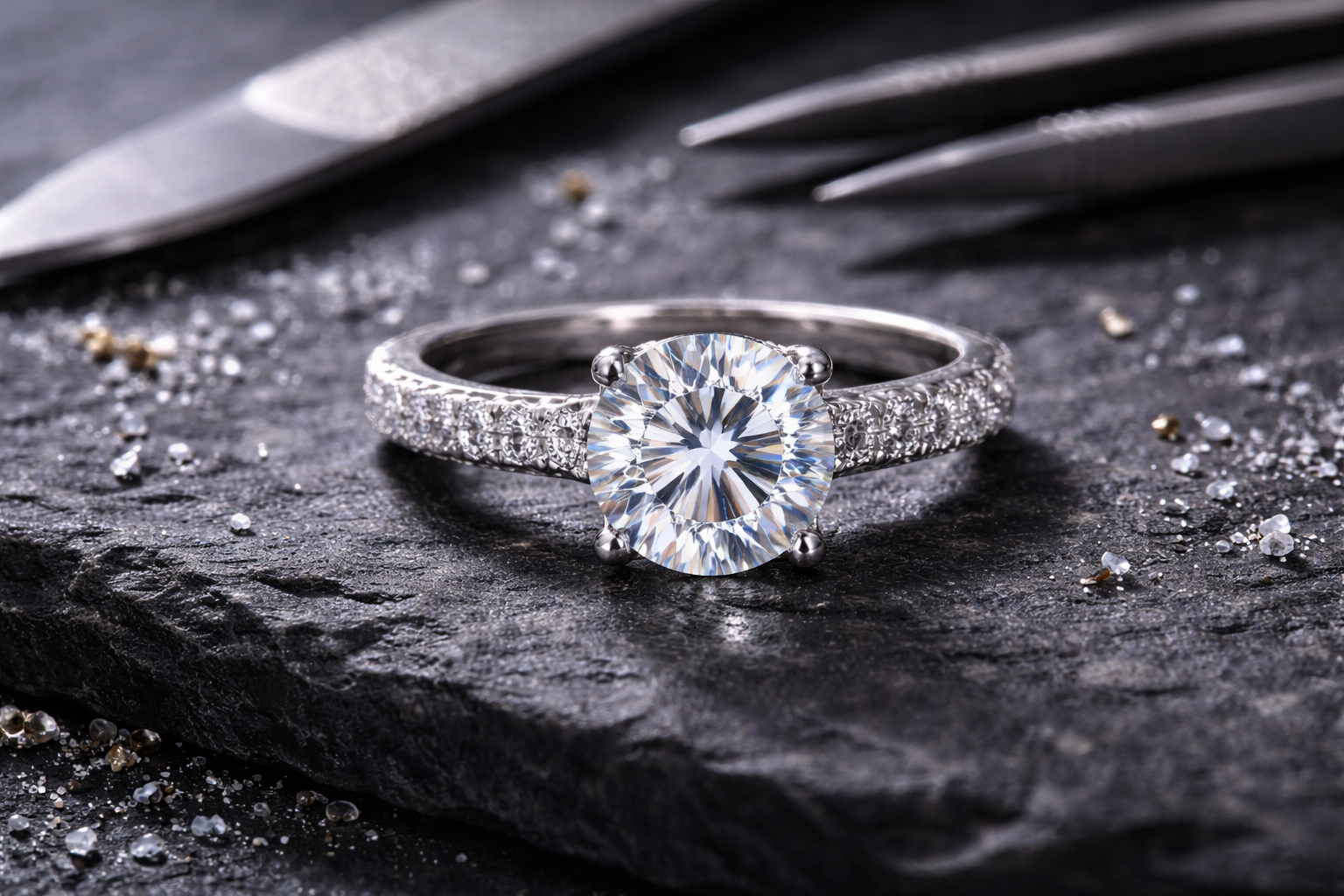
Once the rough crystal is complete, it is cut by expert lapidaries using diamond-grade tools. The cut determines how light enters, reflects, and exits the stone — directly impacting brilliance and fire.
High-grade moissanite, such as VVS1, is then graded for clarity, symmetry, and light performance. Only stones that meet strict standards move forward into fine jewelry production.
Why Precision Matters
Because moissanite is created rather than mined, every variable can be controlled:
-
Clarity
-
Color
-
Crystal structure
-
Light performance
This eliminates the randomness found in natural stones and results in consistent, repeatable quality.
Low-grade moissanite or cubic zirconia is often produced quickly, leading to cloudy appearance, weak brilliance, and poor longevity. High-grade moissanite maintains its clarity and sparkle over time.
A Modern Approach to Luxury
Moissanite represents a shift in how luxury is defined. Instead of rarity driven by scarcity, it offers value driven by performance, durability, and design.
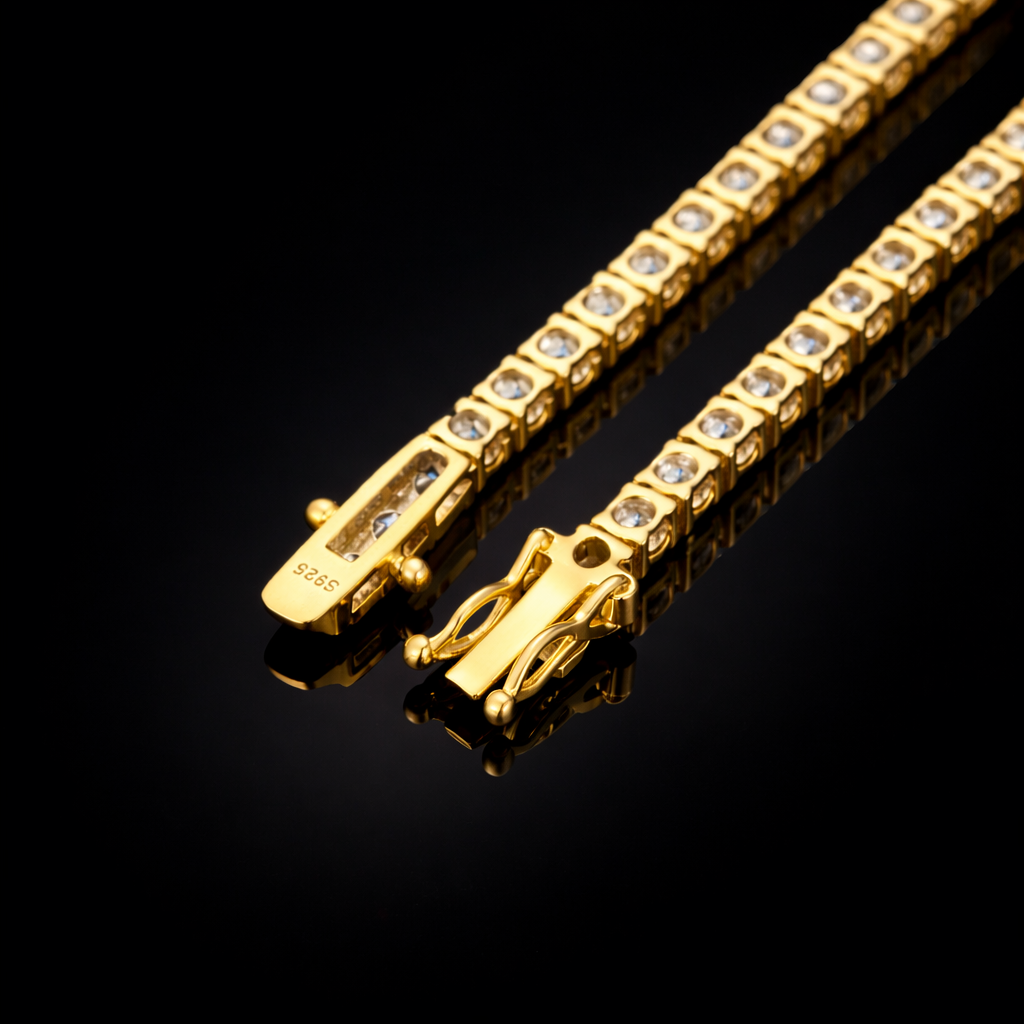
At JUVÉ, we use only VVS1 moissanite because it aligns with our belief that modern luxury should be intentional, precise, and built to last.
Moissanite is not an imitation. It is the result of advanced engineering — and a clear example of how craftsmanship and technology can redefine fine jewelry.


Leave a comment
This site is protected by hCaptcha and the hCaptcha Privacy Policy and Terms of Service apply.